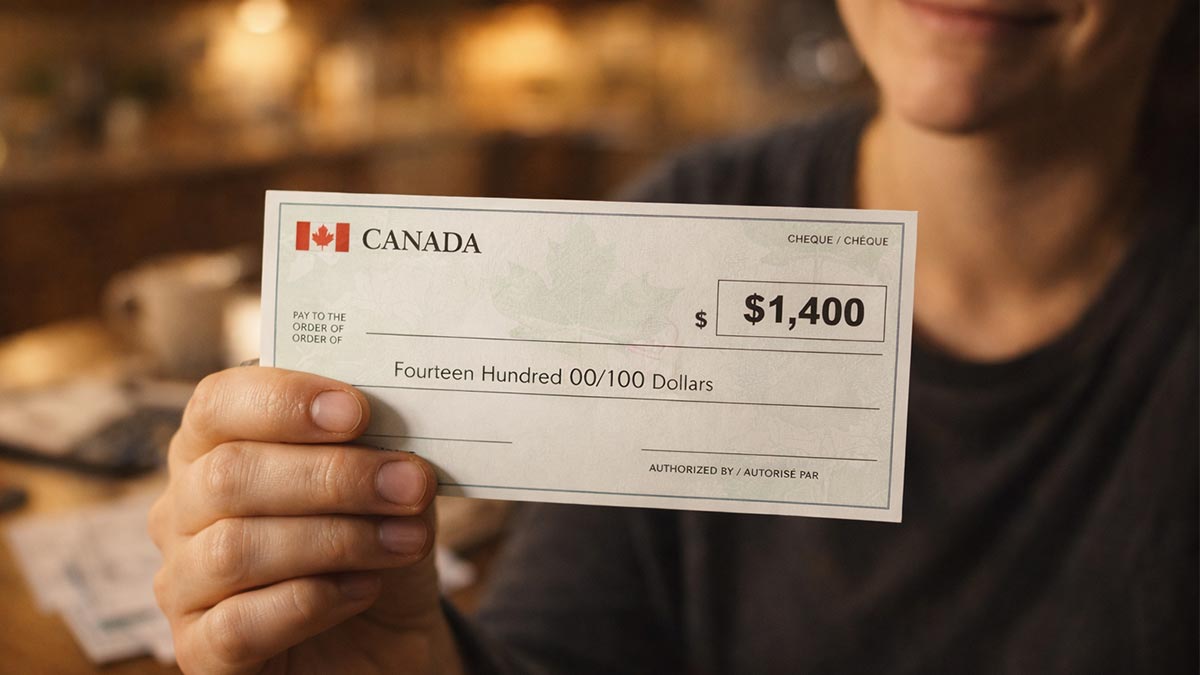
The Canada Revenue Agency’s (CRA) updated tax measures for 2026 are drawing considerable attention from taxpayers nationwide. Against the backdrop of rising living costs, these adjustments are designed to modernize Canada’s tax framework while delivering stronger financial relief to Canadian households.
Through a combination of credits and benefits, eligible Canadians stand to receive as much as $1,400 in 2026. However, this figure is not a blanket payment — it varies based on each taxpayer’s financial circumstances and family situation.
Understanding the Nature of These Payments
A Combined Amount, Not a Single Cheque
The $1,400 maximum does not represent a single lump-sum payment issued to every Canadian. Instead, it is a ceiling that can be reached by stacking multiple forms of financial assistance, including:
- Refundable tax credits
- Government benefit programs
- Cost-of-living adjustments
Each program carries its own eligibility requirements, which is precisely why the amounts differ from one household to the next.
A Targeted Approach to Financial Relief
These measures are deliberately structured to prioritise households hit hardest by inflation. Low- and middle-income earners are therefore the primary intended beneficiaries of the 2026 tax changes.
How Payment Amounts Are Determined
Key Factors That Influence Your Total
The final amount any individual or family receives hinges on several important variables:
- Annual income — the lower the income, the greater the financial support
- Family composition — whether you have children or other dependants
- Eligibility for existing programs — which credits and benefits you qualify for
- Tax residency status — your classification as a Canadian tax resident
Because of these variables, two households with different profiles can end up receiving vastly different amounts.
Real-World Examples
- A single individual with a modest income may receive a moderate benefit
- A family with children is more likely to reach a higher level of total assistance
- A high-income earner will typically receive a reduced amount or may not qualify at all
2026 CRA Tax Changes: Simplified Overview Table
| Situation | Plain-Language Explanation | What You Can Expect |
|---|---|---|
| Low income | High priority | Larger payment |
| Middle income | Partial assistance | Moderate payment |
| High income | Limited support | Reduced payment |
| Family with children | Additional support layer | Higher total payments |
| Filed tax return | Essential condition | Payment triggered |
| Tax credits applied | Tax reduction mechanism | Financial gain |
| Multiple benefits combined | Cumulative effect | Up to $1,400 |
| Up-to-date information on file | No processing delays | Faster payment |
How to Maximise Your 2026 CRA Payments
File Your Tax Return on Time
The single most important step to unlocking these benefits is submitting your tax return before the deadline. The CRA relies on this information to assess your eligibility across all applicable benefit programs.
Filing late — or not at all — can lead to delayed payments or the forfeiture of certain credits altogether.
Review Your Eligibility Thoroughly
A surprising number of Canadians are unaware of all the credits they are entitled to claim. To ensure you are not leaving money on the table, it is advisable to:
- Log in and regularly check your CRA My Account online
- Use the CRA’s available benefit estimation tools
- Stay informed about newly introduced programs
Even a quick eligibility check can result in a meaningfully higher payout.
Keep Your Personal Information Current
Outdated or inaccurate information on file with the CRA can cause unnecessary payment delays. Make sure the following details are always up to date:
- Banking details for direct deposit
- Mailing address
- Family and marital status changes
Keeping your profile current ensures smoother, faster processing with no avoidable interruptions.
- → GST Housing Rebate 2026: Why Builders Say It Won’t Fully Revive Canada’s Condo Market
- → Canada Minimum Wage Increase 2026: Federal Rate Rises to $18.15 per Hour
- → Canada Relationship Finance Survey 2026: How Economic Pressures Are Shaping Modern Relationships
- → CRA Grocery Benefit and GST/HST Credit Boost in 2026: Eligibility, Payments, and What Families Should Know
- → CRA Filing System Changes in 2026: End of Tax Drop Boxes Across Canada
- → Working While on CPP in 2026: How Your Job Can Increase or Reduce Your Pension
- → CRA $2,200 Senior Bonus (March 2026): Eligibility, Payment Date & Latest Updates
Financial Support Aligned With Economic Realities
The 2026 tax changes form part of a broader government strategy to cushion Canadians against the effects of ongoing inflation. By recalibrating credits and benefit amounts, Ottawa aims to:
- Ease the financial burden on households
- Encourage consumer spending
- Strengthen overall economic stability
These measures hold particular significance for families and individuals in lower income brackets, who tend to feel the squeeze of inflation most acutely.
The Importance of Proactive Tax Planning
To extract maximum value from these changes, a forward-thinking approach to tax management is essential. This means:
- Planning your finances with the new credits in mind well ahead of tax season
- Keeping all tax-related documents organised and readily accessible
- Seeking advice from a qualified tax professional when your situation is complex
Smart planning not only helps you optimise your payments but also minimises the risk of administrative errors that could slow things down.
Conclusion
The CRA’s 2026 tax changes, carrying a potential benefit of up to $1,400, represent a meaningful opportunity for a broad cross-section of Canadians. While the exact amount you receive will depend on your individual income level, family structure, and program eligibility, the measures collectively provide tangible relief in the face of today’s economic pressures.
Filing your return on time, verifying which credits apply to your situation, and keeping your CRA account information current are the three most effective steps you can take to ensure you receive everything you are entitled to.
In an uncertain economic climate, every dollar of financial support matters. Taking a proactive, informed approach to your tax obligations is the most reliable way to take full advantage of what these 2026 measures have to offer.
Frequently Asked Questions (FAQs)
Q1. Who is eligible to receive up to $1,400 through these CRA changes? A. Low- and middle-income Canadians, families with dependent children, and taxpayers who qualify for multiple credits and benefit programs are most likely to reach the $1,400 maximum.
Q2. Do you need to apply separately to receive these payments? A. In most cases, no. The majority of payments are issued automatically once your tax return has been filed and processed by the CRA.
Q3. Is the $1,400 amount guaranteed for every Canadian? A. No. It represents the maximum possible combined amount. Your actual payment will depend on your income, family situation, and the specific credits and benefits you are eligible for.