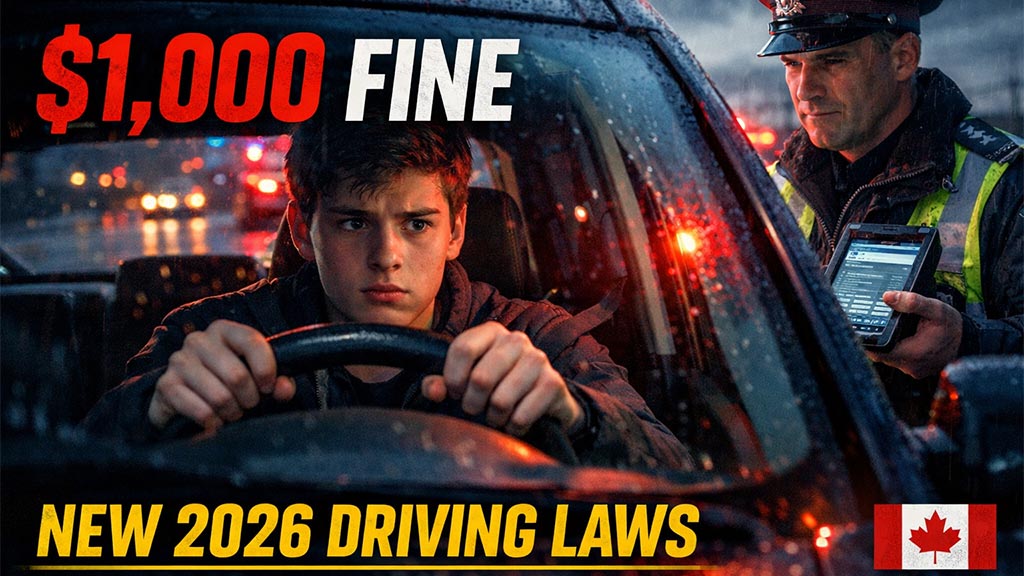
Canada is on the verge of a major transformation in its driver licensing landscape. Set to take effect in 2026, sweeping reforms to the Graduated Licensing Program (GLP) will introduce tougher standards, expanded supervision requirements, and substantially higher financial penalties — with fines climbing as high as $1,000. The overhaul is designed to address growing road safety concerns and foster more disciplined, responsible driving habits among new motorists.
The End of a More Lenient Era
For years, Canada’s graduated licensing system offered relatively flexible conditions for learner drivers. Those days are coming to an end. Provincial authorities are overhauling the GLP framework to extend evaluation timelines, reduce tolerance for repeated violations, and ensure that novice drivers gain meaningful, verifiable on-road experience before earning full driving privileges.
Zero Tolerance for High-Risk Driving
A cornerstone of the 2026 reforms is an unwavering stance against dangerous driving behaviors. Distracted driving, speeding, and impaired operation will no longer be met with minor warnings during the learner stage. Many provinces plan to deploy digital monitoring tools capable of tracking compliance in real time, leaving little room for new drivers to circumvent restrictions. The message is clear: mistakes during the probationary period will carry real consequences.
More Rigorous Supervised Learning Requirements
The updated program places a stronger emphasis on structured, documented driving practice. Learners will be required to complete extended hours of supervised driving, and instructors must maintain detailed performance records. Parents and guardians are also expected to take a more active role — not just as passengers, but as accountable participants in their teen’s learning journey.
Steeper Penalties and Enforcement Measures
Perhaps the most attention-grabbing aspect of the reform is the dramatic increase in financial penalties. Fines for violating licensing restrictions can now reach $1,000 — double the previous ceiling of $500. Immediate license suspensions are also on the table, particularly for those who repeatedly break the rules. Authorities hope these measures will deter risky behavior before it becomes a habit.
Mandatory Re-Education for Repeat Offenders
Drivers who continually disregard the rules may find themselves back at square one. The 2026 framework includes provisions requiring repeat violators to restart parts of the licensing process and complete updated driver education courses. These refreshed programs address contemporary road challenges, including navigating around electric vehicles, interacting with smart traffic infrastructure, and understanding emerging automotive safety technologies.
Insurance Consequences to Consider
- → GST Housing Rebate 2026: Why Builders Say It Won’t Fully Revive Canada’s Condo Market
- → Canada Minimum Wage Increase 2026: Federal Rate Rises to $18.15 per Hour
- → Canada Relationship Finance Survey 2026: How Economic Pressures Are Shaping Modern Relationships
- → CRA Grocery Benefit and GST/HST Credit Boost in 2026: Eligibility, Payments, and What Families Should Know
- → CRA Filing System Changes in 2026: End of Tax Drop Boxes Across Canada
- → Working While on CPP in 2026: How Your Job Can Increase or Reduce Your Pension
- → CRA $2,200 Senior Bonus (March 2026): Eligibility, Payment Date & Latest Updates
Beyond fines and suspensions, families should prepare for potential ripple effects on their insurance premiums. Violations recorded under the new system may be shared between government agencies and insurance providers, resulting in higher rates for non-compliant drivers. This financial dimension adds another layer of incentive for young drivers to stay on the right side of the rules.
What This Means for Canadian Families
Greater Parental Responsibility The reforms don’t just affect young drivers — they reshape the role of the entire household. With extended supervision periods and more rigorous performance tracking, parents are now integral partners in the licensing process. Logging driving hours, offering constructive feedback, and modeling safe habits behind the wheel will all become routine expectations.
A Culture of Accountability Digital compliance tracking, automated reporting systems, and enhanced oversight mechanisms ensure that neither learners nor their supervisors can take a passive approach. The new framework prioritizes genuine skill development over simply ticking boxes to fulfill minimum requirements.
Old System vs. 2026 Reforms: A Side-by-Side Comparison
| Rule Category | Previous System | 2026 Update |
|---|---|---|
| Maximum Fine | Up to $500 | Up to $1,000 |
| Probation Period | Standard duration | Extended supervision |
| Repeat Violations | Warning or minor penalty | Immediate suspension possible |
| Driver Education | Basic mandatory course | Updated, comprehensive modules |
| Compliance Monitoring | Manual checks | Digital tracking systems |
Practical Tips for New Drivers Navigating the 2026 System
- Accumulate varied driving hours — Practice in different conditions, including highways, night driving, and adverse weather, to build genuine competence.
- Know your province’s specific rules — While the federal framework sets the tone, individual provinces may apply additional or varying requirements.
- Put safety above all else — Avoiding risky behaviors isn’t just about dodging fines; it’s about forming habits that last a lifetime.
- Use digital tools to your advantage — Province-recommended apps and compliance logs can help track progress and demonstrate good faith to examiners.
- Keep communication open with guardians — Transparency between learners and supervising adults makes the entire process smoother and safer.
Conclusion
Canada’s 2026 Graduated Licensing reforms represent a meaningful shift in how the country approaches road safety for new drivers. By introducing higher fines, digital enforcement, extended supervision, and mandatory re-education for repeat offenders, the updated GLP framework sends a firm message: driving is a privilege that must be earned and maintained responsibly. For young drivers and their families, getting ahead of these changes now — through preparation, awareness, and active engagement — is the surest path to navigating the new system with confidence.
Frequently Asked Questions (FAQs)
Q1: When do Canada’s new driving laws take effect? The updated Graduated Licensing Program rules are scheduled to come into force in 2026, though specific rollout timelines may vary by province.
Q2: How much can the new fines reach under the 2026 GLP reforms? Penalties for violating licensing restrictions can now reach up to $1,000, compared to the previous maximum of $500.
Q3: Can a learner driver have their license suspended under the new rules? Yes. Immediate suspensions are possible, especially for repeat violations of GLP conditions.
Q4: Will violations affect insurance premiums? They can. Infractions recorded under the new system may be flagged to insurance providers, potentially resulting in higher premiums for affected drivers.
Q5: Do parents have any legal responsibility under the new framework? While parents are not directly penalized, they are expected to play a more active and accountable role in supervising and documenting their teen’s driving practice.
Q6: What happens if a driver repeatedly breaks the new rules? Repeat offenders may be required to restart portions of the licensing process and complete updated driver education modules before progressing again.