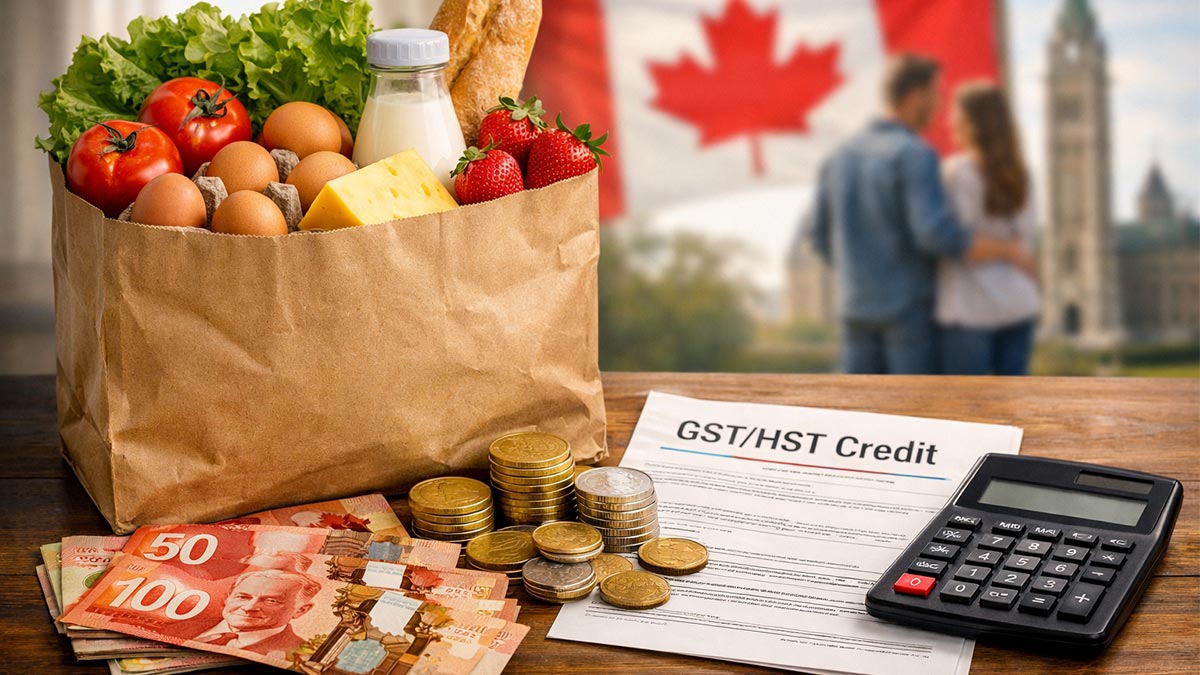
As food prices continue to squeeze Canadian household budgets, the federal government has rolled out two targeted financial relief measures — a dedicated Grocery Benefit and a significant boost to the GST/HST Credit. Together, these initiatives deliver automatic, tax-free cash support directly to millions of Canadians struggling with the rising cost of everyday essentials like meat, dairy, and fresh produce.
Managed entirely by the Canada Revenue Agency (CRA), both programs require no manual application. Instead, your most recent tax return serves as the basis for determining eligibility and calculating payment amounts. Whether you are a single parent, a retiree on a fixed income, or a large family stretching every dollar, this comprehensive guide covers everything you need to know — from eligibility requirements and estimated amounts to payment dates and practical tips.
Why the Government Is Acting Now: The Food Inflation Crisis
Grocery bills across Canada have surged dramatically in recent years, turning routine shopping trips into a source of financial stress for millions of households. Staple items such as bread, milk, eggs, and chicken have seen price increases that far outpace wage growth, forcing many families to cut back on nutritious food choices.
In response, the federal government has introduced these two complementary measures to directly offset the financial damage caused by sustained food inflation. The newly introduced Grocery Benefit works alongside an enhanced GST/HST Credit — a well-established rebate mechanism that already returns a portion of sales taxes paid on everyday purchases — to provide a more comprehensive layer of protection for Canadian families.
For lower-income households in particular, where inflation disproportionately erodes purchasing power, these tax-free payments act as a vital financial buffer. They are designed not just to provide short-term relief but to help families maintain a stable standard of living despite ongoing economic pressures.
The New Grocery Benefit: Key Details
The Grocery Benefit is a newly introduced federal payment specifically crafted to address the sharp rise in food-related expenses. Drawing on lessons from past emergency relief programs — which successfully distributed billions of dollars to Canadians during economic crises — this benefit offers targeted, needs-based support calibrated to each household’s circumstances.
Payment amounts are determined by family income and the number of dependants, ensuring that the greatest assistance flows to those facing the most financial strain.
How the Grocery Benefit Works
- Fully automatic: The CRA calculates and issues payments based on your filed tax return — no separate application is needed
- Income-tested: Lower and middle-income households receive priority, with amounts scaling upward based on family size and financial need
- Flexible delivery: Recipients can choose between direct deposit for near-instant access or a mailed cheque
- Possible integration: Payments may be combined with quarterly GST/HST Credit disbursements for streamlined delivery
Past comparable programs have demonstrated the effectiveness of this model, proving that rapid, targeted cash transfers can meaningfully stimulate local spending while easing household financial stress.
The GST/HST Credit: How It Works and What’s Changing
The GST/HST Credit is an established federal rebate that returns a portion of the Goods and Services Tax and Harmonized Sales Tax that Canadians pay throughout the year on everyday purchases. Payments are issued four times annually — in January, April, July, and October — and are calculated directly from your annual income tax return.
The government has announced a substantial increase to this credit, meaning eligible recipients could see their annual rebate grow by potentially several hundred dollars compared to previous years. This enhancement makes an already valuable program significantly more impactful for qualifying households.
What Determines Your GST/HST Credit Amount?
Several key factors influence how much you receive:
- Annual household income: The full credit amount is available to those below income thresholds, tapering off gradually as earnings rise
- Household composition: Couples and families with children receive higher combined amounts
- Age and marital status: Additional supplements are available for seniors and qualifying dependants
This income-sensitive structure ensures that public funds are redistributed in a fair, targeted manner — with the greatest benefit going to households that need it most.
Who Qualifies? Eligibility Explained
Eligibility criteria for both programs are intentionally straightforward and inclusive, centered on three core requirements: moderate income, Canadian residency, and an up-to-date tax return. The CRA handles all verification automatically, eliminating the need for complex paperwork or separate applications.
Specific thresholds vary slightly by province, but in general, single-parent households and low-income families stand to receive the highest benefit amounts.
Eligibility by Household Type
| Household Type | Benefit Structure |
|---|---|
| Single individuals | Base amount, adjusted to personal income |
| Couples | Enhanced combined amount |
| Families with children | Additional amount per dependent child |
Steps to Ensure You Qualify
- Maintain Canadian residency throughout the relevant tax year
- File your annual income tax return on time — even if you have no income to report
- Keep your CRA My Account information current, including your address and banking details
Estimated Amounts, Payment Schedule & Delivery Options
While final figures are still being confirmed by the government, projections suggest that the combined impact of the boosted GST/HST Credit and the new Grocery Benefit could mean several hundred dollars in additional annual support for a single individual, with proportionally higher amounts for couples and families.
Expected Payment Timeline
- Grocery Benefit: Likely issued as a one-time lump-sum payment, with the exact date to be announced on canada.ca
- Enhanced GST/HST Credit: Delivered within the existing quarterly framework, with April and July being the first cycles where the increase is expected to take effect
- Official confirmation: Always check canada.ca for the most current and precise payment dates
Direct Deposit: The Fastest Way to Receive Your Money
Setting up direct deposit is the single most effective step you can take to ensure timely access to your payments. Funds delivered via direct deposit typically arrive within a few business days of the payment date — far faster than waiting for a cheque in the mail.
Benefits of Direct Deposit
- Immediate access to funds as soon as they are released by the CRA
- Real-time tracking through the My CRA Account portal
- Eliminates risk of lost, stolen, or delayed postal cheques
To activate direct deposit, simply log in to My CRA Account on the CRA’s official website and enter your banking details — transit number, institution number, and account number — in just a few minutes.
- → GST Housing Rebate 2026: Why Builders Say It Won’t Fully Revive Canada’s Condo Market
- → Canada Minimum Wage Increase 2026: Federal Rate Rises to $18.15 per Hour
- → Canada Relationship Finance Survey 2026: How Economic Pressures Are Shaping Modern Relationships
- → CRA Grocery Benefit and GST/HST Credit Boost in 2026: Eligibility, Payments, and What Families Should Know
- → CRA Filing System Changes in 2026: End of Tax Drop Boxes Across Canada
- → Working While on CPP in 2026: How Your Job Can Increase or Reduce Your Pension
- → CRA $2,200 Senior Bonus (March 2026): Eligibility, Payment Date & Latest Updates
Security reminder: The CRA will never contact you by phone, email, or text message requesting sensitive personal or banking information. Any such communication should be treated as a scam and reported immediately.
Who Benefits Most — and How to Maximize Your Payment
While all eligible Canadians stand to gain from these measures, certain groups are positioned to receive the most significant relief:
- Retirees and seniors on fixed incomes facing disproportionate food cost increases
- Single-parent families managing household expenses on a single income
- Essential and low-wage workers in urban centres where living costs are highest
- Large families whose grocery bills have grown substantially with each price increase
Practical Tips to Maximize Your Benefit
- File your taxes early — the sooner your return is processed, the sooner your eligibility is confirmed
- Activate direct deposit through My CRA Account to receive funds without delay
- Update your personal information promptly if you move, change banks, or experience a change in family status
- Monitor canada.ca regularly for official announcements on payment dates and amounts
- Report life changes within 30 days — divorce, new dependants, or address changes can all affect your payment amount
Long-Term Economic Impact
Beyond the immediate relief these payments provide, both measures reflect a broader federal strategy to address structural inflation and strengthen the financial resilience of Canadian households over time.
In the short term, putting more money directly into the hands of consumers stimulates local spending — a proven driver of economic activity at the community level. Over the longer term, responsive and adaptive benefit programs like these may lay the groundwork for more lasting fiscal reforms that protect purchasing power even as economic conditions continue to evolve.
By recalibrating existing programs to meet present-day challenges, the government is signalling a commitment to inclusive economic growth — one that prioritizes the stability and security of everyday Canadians rather than those at the top of the income scale.
Conclusion
The introduction of Canada’s new Grocery Benefit and the enhancement of the GST/HST Credit mark a significant federal response to the cost-of-living crisis that has challenged households across the country. Automatic, equitable, and meaningfully generous, these two programs will collectively reach millions of Canadians — delivering tax-free financial relief without the burden of applications or paperwork.
The most important steps you can take right now are simple: file your 2025 tax return as early as possible, ensure your CRA My Account profile is up to date, and activate direct deposit to receive your payments without unnecessary delays. In a period of ongoing economic uncertainty, these measures offer genuine financial breathing room — and taking a few minutes to prepare now could mean faster access to funds you are fully entitled to receive.
Frequently Asked Questions (FAQs)
Q1: Who is eligible for Canada’s new Grocery Benefit? Low and middle-income households that already qualify for the GST/HST Credit will automatically receive this benefit. Eligibility is determined by the CRA based on your most recent filed tax return — no separate application is required.
Q2: Do I need to apply for these payments? No. Both the Grocery Benefit and the enhanced GST/HST Credit are distributed automatically by the CRA using your existing tax filing data. Simply ensure your return is filed and your account information is current.
Q3: When will I receive these payments? The enhanced GST/HST Credit follows the standard quarterly schedule, with April and July being the first expected disbursement cycles. The Grocery Benefit may be issued as a separate one-time payment — check canada.ca for official dates.
Q4: How do I set up direct deposit for faster payment? Log in to My CRA Account on the CRA’s official website and add your banking information under the direct deposit section. The process takes only a few minutes and ensures funds reach you as quickly as possible.
Q5: How much will I receive approximately? A single individual could receive several hundred dollars annually through the boosted GST/HST Credit, plus an additional amount from the Grocery Benefit. Couples and families with children will receive higher combined totals, all adjusted proportionally to household income.