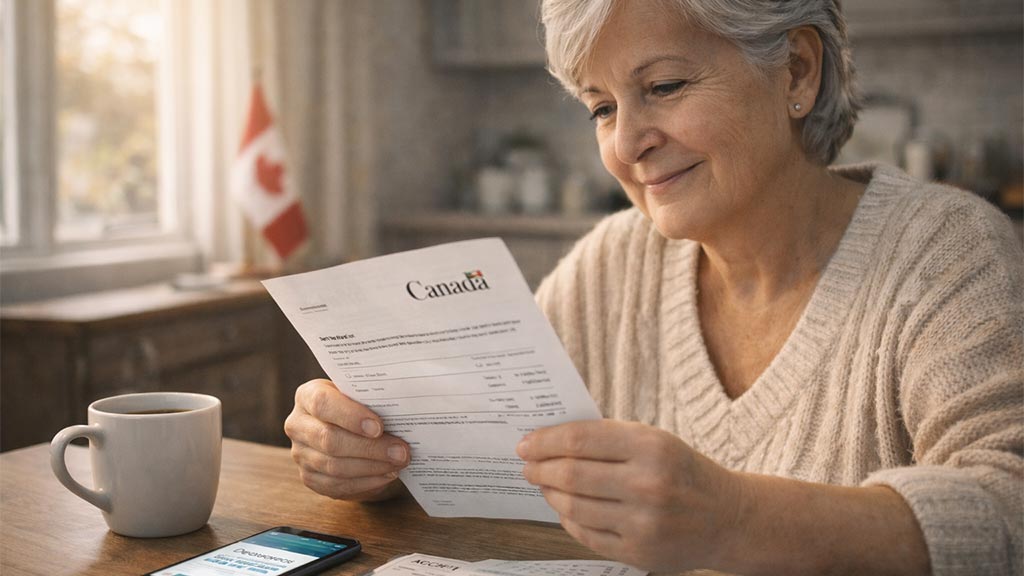
If you’re a widowed Canadian between the ages of 60 and 64 living on a modest income, the Canada Survivor Allowance may be one of the most important monthly payments hitting your bank account right now. In March 2026, the maximum monthly benefit has climbed to $1,647.34 — a reflection of just how much the cost of living has gone up over the past couple of years.
I want to walk you through everything you need to know: what this benefit actually is, whether you qualify, how that $1,647.34 figure gets calculated, when your March 2026 deposit is expected to land, and what you should be doing right now to make sure nothing gets delayed.
What Is the Canada Survivor Allowance?
The Survivor Allowance is a federal, income-tested monthly benefit administered by the Government of Canada. It exists specifically to support widowed Canadians who are between 60 and 64 years old and don’t yet have access to Old Age Security (OAS).
Think of it as a bridge. When a spouse or common-law partner passes away, household income often takes a serious hit — shared pensions disappear, CPP survivor benefits only go so far, and you’re still years away from the age 65 benefits threshold. The Survivor Allowance was designed to cover that gap.
It’s closely connected to the OAS and Guaranteed Income Supplement (GIS) framework, but it serves a completely different and more targeted purpose — specifically for those who are widowed and not yet retirement-age eligible.
Who Qualifies for the Survivor Allowance in 2026?
Eligibility rules haven’t loosened up. If anything, it’s worth reviewing these carefully, because missing even one requirement means no payment.
Age
You must be between 60 and 64 years old. The moment you turn 65, the Survivor Allowance stops — at that point, you’d transition to OAS and potentially GIS, which is a whole separate process.
Marital Status
You must be legally widowed. That means your spouse or common-law partner has passed away, you haven’t remarried, and you haven’t entered into a new common-law relationship. Getting into a new relationship — even informally qualifying as common-law — ends your eligibility immediately.
People who are divorced or separated don’t qualify unless their former partner has since died and they meet the legal definition of a widow or widower.
Canadian Residency
You must be a Canadian citizen or legal resident who has lived in Canada for at least 10 years after reaching the age of 18. In some circumstances, longer residency periods may apply depending on your specific situation.
- → GST Housing Rebate 2026: Why Builders Say It Won’t Fully Revive Canada’s Condo Market
- → Canada Minimum Wage Increase 2026: Federal Rate Rises to $18.15 per Hour
- → Canada Relationship Finance Survey 2026: How Economic Pressures Are Shaping Modern Relationships
- → CRA Grocery Benefit and GST/HST Credit Boost in 2026: Eligibility, Payments, and What Families Should Know
- → CRA Filing System Changes in 2026: End of Tax Drop Boxes Across Canada
- → Working While on CPP in 2026: How Your Job Can Increase or Reduce Your Pension
- → CRA $2,200 Senior Bonus (March 2026): Eligibility, Payment Date & Latest Updates
Income Threshold
This is where it gets personal. The Survivor Allowance is income-tested, meaning the amount you receive — or whether you receive anything at all — depends on your annual income. The CRA pulls this information from your most recent tax return.
Income sources that count include employment earnings, pension income, CPP survivor benefits, investment returns, and certain foreign income. If you haven’t filed your taxes, your payments could be delayed or suspended entirely.
How Is the $1,647.34 Maximum Payment Calculated?
Let me break down where this number comes from, because it’s not arbitrary.
The Payment Formula
Your monthly Survivor Allowance is made up of a base benefit amount, adjusted each quarter for inflation, minus reductions based on your income. The less income you have coming in, the closer you get to that $1,647.34 ceiling.
If your income is essentially zero or very low, you may receive the full maximum. As your income increases, the benefit is reduced gradually — and once you exceed the eligibility income threshold, payments stop altogether.
Quarterly Inflation Adjustments
Benefits tied to the OAS program — including the Survivor Allowance — are reviewed every three months against the Consumer Price Index. High inflation throughout 2024 and 2025 has pushed benefit rates noticeably higher heading into early 2026.
That’s the direct reason the March 2026 maximum sits at $1,647.34 — it’s higher than previous years because the CPI has risen, and the benefit is designed to keep pace with real-world costs like rent, groceries, and prescriptions.
March 2026 Payment Date: When Will the Money Arrive?
The Survivor Allowance follows the same monthly payment schedule as other federal senior benefits.
Direct Deposit
If you’re enrolled in direct deposit, your payment will typically clear early in the morning on the scheduled deposit date — usually near the end of March 2026, in line with the federal benefits calendar. The exact date is published annually by the Government of Canada, so it’s worth bookmarking that schedule.
Different banks may process the deposit at slightly different times, but most recipients see it hit their accounts first thing in the morning.
Paper Cheque
If you’re still receiving cheques by mail, factor in a few extra days for delivery. Postal timelines vary by region and can be unpredictable. If you depend on this payment for monthly expenses, switching to direct deposit is a simple change that’s absolutely worth making — you can update your banking information through your My Service Canada Account.
Is Your March 2026 Payment Automatic?
For the vast majority of existing recipients, yes. If you were approved previously, your payments continue month-to-month as long as:
- Your income stays within eligibility limits
- You still meet all residency and marital status requirements
- You’ve filed your annual tax return
You don’t need to reapply every year. However, the CRA reassesses your eligibility each year using updated tax information, which is why filing your return on time is so important.
Reasons Your Payment Could Be Reduced, Delayed, or Stopped
Even long-time recipients can run into problems. Here are the most common ones:
Unfiled Tax Returns
This is the biggest issue by far. If the CRA doesn’t have your current income information, they can’t confirm your eligibility or calculate your correct payment amount. File your taxes on time — even if your income is minimal.
Increased Income
If you’ve started a new job, begun receiving additional pension payments, or your investment income has grown, your Survivor Allowance may be reduced or cut off depending on the new total. This doesn’t mean you should avoid earning more — just be aware of how it interacts with the benefit.
Remarriage or New Common-Law Relationship
If your marital status changes, you must report it immediately. Failing to do so can result in overpayments that you’ll be required to pay back — sometimes with interest.
Outdated Banking Information
If you’ve changed banks or accounts and haven’t updated your direct deposit details, your payment won’t reach you on time. Log into your My Service Canada Account and double-check your banking information before the payment date.
How the Survivor Allowance Fits With Other Benefits
The Survivor Allowance is designed to complement other income support — not compete with it.
CPP Survivor Benefits
Many recipients also receive CPP survivor benefits. These payments count toward your annual income, which means they can reduce your Survivor Allowance amount. But receiving CPP doesn’t automatically disqualify you — it depends on your total combined income.
Transitioning to OAS and GIS at Age 65
When you turn 65, the Survivor Allowance ends. The good news is that you’ll likely be eligible for OAS and possibly GIS — but this transition doesn’t always happen automatically.
If you’re turning 65 in 2026, apply several months in advance. Processing takes time, and you don’t want a gap in income between your last Survivor Allowance payment and your first OAS deposit. Make sure your tax returns are current and review the documentation requirements well ahead of your birthday.
Why the 2026 Survivor Allowance Matters More Than Ever
Widowed Canadians under 65 are navigating a particularly tough financial environment right now. Rent and housing costs have surged in most major cities, grocery bills have climbed steadily, prescription and healthcare costs aren’t letting up, and utility and insurance expenses keep rising.
Losing a spouse already means losing part of your household’s financial foundation. The Survivor Allowance directly addresses that reality. The increase to $1,647.34 per month isn’t just a number — for many recipients, it’s what keeps them in their home and able to cover basic expenses month to month.
What You Should Do Right Now to Protect Your March 2026 Payment
File your 2025 tax return as soon as possible. Even if you have little or no income, filing ensures the CRA can calculate your eligibility and payment amount without delays.
Review your My Service Canada Account. Check that your mailing address, direct deposit details, and marital status are all accurate and up to date.
Report any changes promptly. If your income, marital status, or residency situation has changed, notify Service Canada right away. Overpayments are stressful to deal with and completely avoidable.
Plan ahead if you’re turning 65 this year. Start the OAS and GIS application process early — don’t wait until after your birthday and risk a gap in benefits.
Conclusion
The Canada Survivor Allowance remains one of the federal government’s most meaningful income supports for widowed Canadians who are still years away from full retirement benefits. For March 2026, the maximum payment of $1,647.34 reflects the government’s acknowledgment that inflation has genuinely eroded the purchasing power of low-income seniors.
That said, the benefit doesn’t manage itself. Staying eligible requires filing your taxes annually, keeping your personal information current, and reporting any life changes as they happen. For those who do everything right, the payments arrive reliably each month — and in today’s economic climate, that reliability means everything.
If you’re approaching 65 in 2026, use this time to start the transition planning process early. The goal is a seamless handoff from Survivor Allowance to OAS and GIS, with no gaps and no stress.
Frequently Asked Questions (FAQs)
Q: Will everyone receiving the Survivor Allowance get the full $1,647.34 in March 2026? No. The $1,647.34 is the maximum available for recipients with very low or no other income. Your actual payment depends on your annual income — higher income means a lower benefit.
Q: Do I need to reapply for the Survivor Allowance every year? No, you don’t reapply annually. Your eligibility is automatically reassessed using your tax return each year. Just make sure you’re filing your taxes on time.
Q: What happens to my Survivor Allowance if I start working part-time? Employment income will count toward your annual total and could reduce your payment. The amount of the reduction depends on how much you earn — contact Service Canada for a personalized estimate.
Q: When exactly is the March 2026 payment date? The Government of Canada publishes official payment dates annually. Payments generally fall near the end of March. Check the official Service Canada website for the confirmed 2026 schedule.
Q: Can I receive both CPP survivor benefits and the Survivor Allowance? Yes, but your CPP survivor benefit counts as income and will affect the amount of Survivor Allowance you receive.
Q: What do I do if my payment doesn’t arrive on the expected date? Wait one to three business days to account for banking processing times. If it still hasn’t arrived after that, contact Service Canada and verify your direct deposit information is correct.
Q: What happens to my income support when I turn 65? The Survivor Allowance ends at 65. You should apply for OAS and GIS several months before your 65th birthday to avoid any gap in payments.