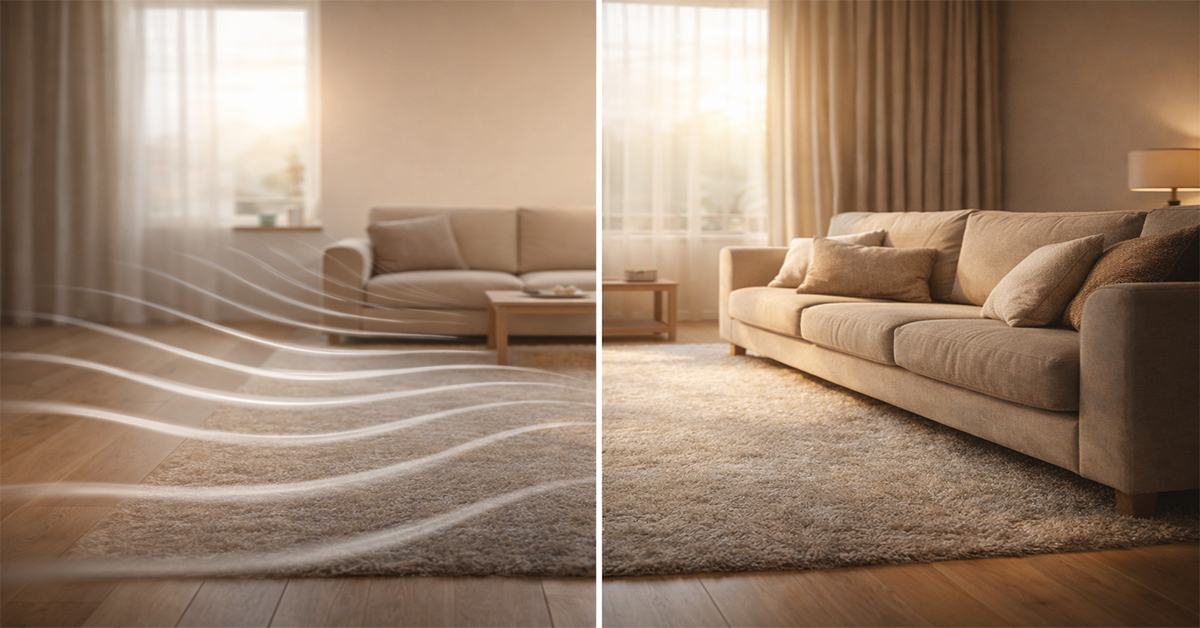
Many people assume a noisy home is just part of modern life.
The dishwasher hums. A television plays somewhere in the background. A phone notification chirps from another room. Someone closes a door upstairs while music drifts through the hallway.
Individually, these sounds are harmless. Together, they create a kind of constant background noise that keeps your brain slightly on edge.
If you’ve ever ended the day feeling unusually tired, irritable, or mentally cluttered even though you never left home, the real culprit might not be stress or screen time.
It could simply be the acoustics of your house.
And the good news is that one small change can often make a surprising difference.
Why Many Homes Feel Louder Than Ever
Modern interior design often favors hard surfaces and minimal decoration.
Think about the materials commonly used today:
- hardwood or tile floors
- glass tables
- large uncovered windows
- bare walls
- sleek minimalist furniture
These surfaces look beautiful, but acoustically they behave like mirrors.
Instead of absorbing sound, they reflect it.
When sound waves bounce off hard surfaces repeatedly, they create echoes and overlapping noise. This effect is known as reverberation.
Even ordinary sounds like conversation, footsteps, or clinking dishes can feel sharper and louder in a space filled with reflective surfaces.
Your brain notices this, even if you don’t consciously think about it.
Studies on environmental noise have shown that persistent sound exposure can contribute to:
- increased stress levels
- reduced concentration
- fatigue
- sleep disturbances
In other words, a noisy house doesn’t just sound uncomfortable — it can make your body feel unsettled too.
The Simple Change That Can Instantly Quiet a Room
The easiest way to reduce household noise is surprisingly simple:
Add soft materials to the room.
Soft surfaces absorb sound rather than reflecting it. This reduces echo and makes the overall environment feel calmer.
Common sound-absorbing elements include:
- area rugs
- curtains or drapes
- upholstered furniture
- cushions and throw blankets
- fabric wall hangings
Even a single large rug can noticeably change how a room sounds.
Instead of bouncing around the space, sound waves are partially absorbed by the fibers.
The result?
Voices soften, footsteps feel quieter, and the room becomes more comfortable to spend time in.
Why Rugs and Curtains Work So Well
From a physics perspective, sound behaves like energy moving through the air.
When it hits a hard surface like glass, tile, or metal, the energy reflects back into the room.
Soft materials act differently.
Fibers, fabrics, and padding contain small air pockets that trap sound energy and dissipate it as heat. This dramatically reduces reflections.
That’s why spaces designed for good acoustics — like recording studios or theaters — often use thick fabrics, carpets, and textured surfaces.
You don’t need professional acoustic panels to get the benefits at home.
A few thoughtful additions can achieve much of the same effect.
How to Quiet Your Home in One Afternoon
You don’t need a renovation to improve your home’s soundscape.
- → GST Housing Rebate 2026: Why Builders Say It Won’t Fully Revive Canada’s Condo Market
- → Canada Minimum Wage Increase 2026: Federal Rate Rises to $18.15 per Hour
- → Canada Relationship Finance Survey 2026: How Economic Pressures Are Shaping Modern Relationships
- → CRA Grocery Benefit and GST/HST Credit Boost in 2026: Eligibility, Payments, and What Families Should Know
- → CRA Filing System Changes in 2026: End of Tax Drop Boxes Across Canada
- → Working While on CPP in 2026: How Your Job Can Increase or Reduce Your Pension
- → CRA $2,200 Senior Bonus (March 2026): Eligibility, Payment Date & Latest Updates
Start with one room where you spend the most time, such as the living room.
Step 1: Test the echo
Stand in the middle of the room and clap your hands once.
If the sound feels sharp or echoes, the room likely has too many reflective surfaces.
Step 2: Add a large rug
Place a rug big enough to sit under the main seating area.
Large rugs absorb more sound than small decorative ones.
Step 3: Cover large windows
Curtains or fabric blinds soften both sound and lighting.
Step 4: Soften hard furniture
Add seat cushions, throws, or upholstered chairs where possible.
Step 5: Use textiles strategically
Table runners, fabric lampshades, and wall art made from fabric can all reduce noise.
Even small additions can change the acoustic feel of a room quickly.
The Hidden Downside of Minimalist Design
Many modern homes emphasize a clean, minimalist look.
While visually appealing, extreme minimalism often removes the very elements that make a space feel comfortable acoustically.
Rooms filled with:
- smooth floors
- empty walls
- glass surfaces
can feel bright and spacious but also harsh and echo-prone.
Adding texture doesn’t mean sacrificing style.
Designers often recommend balancing hard and soft elements to create both visual and acoustic comfort.
Living With Sound Instead of Fighting It
A peaceful home doesn’t mean complete silence.
Every home has its own natural soundtrack — the sound of cooking, conversation, laughter, or rain against the windows.
The goal isn’t to eliminate these sounds.
It’s to make sure they feel gentle rather than overwhelming.
When a space absorbs sound properly, everyday noises become softer and more pleasant.
Instead of echoing through the house, they stay where they belong.
That small shift can transform how your home feels at the end of a long day.