I want to tell you about the night my cooking actually changed. Not in a dramatic, chef’s-table, life-altering way. In the quiet, unglamorous way that real things actually change — standing at the stove at 8 p.m., tired, slightly irritated, staring at a piece of chicken that had done nothing to deserve the indifference I was about to serve it with.
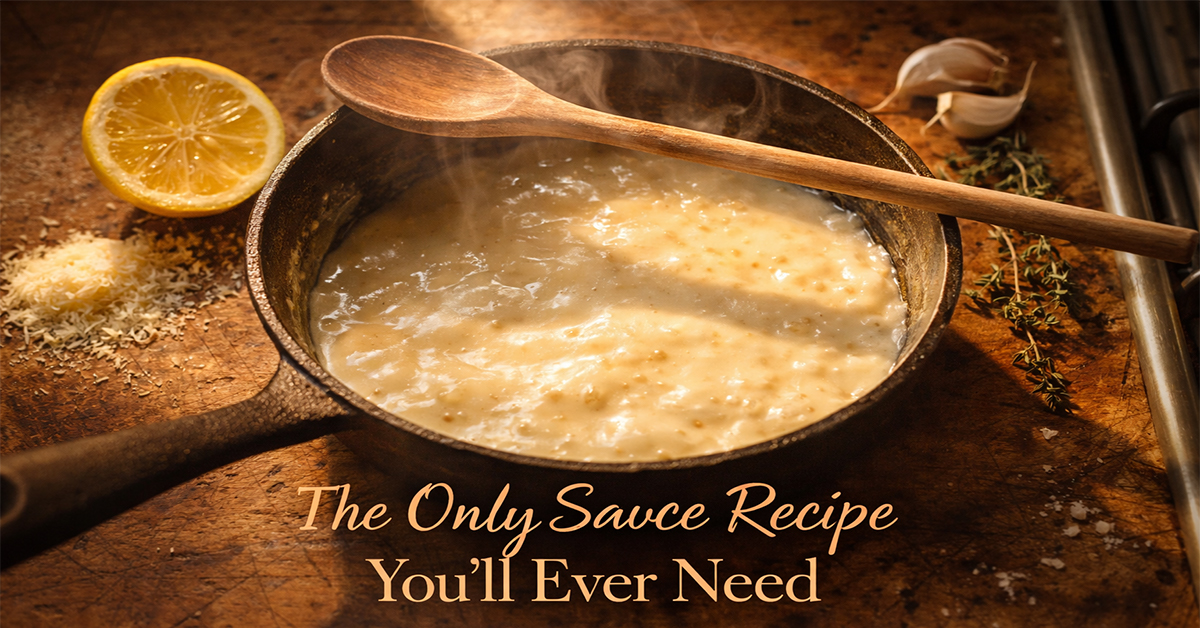
My fridge had almost nothing going for it. A knob of butter. Half a lemon rolling around on the shelf. Some Parmesan I’d been grating onto things all week. A lonely garlic clove. A carton of cream hiding behind the leftovers I kept promising myself I’d eat.
On a whim — genuinely just out of hunger and mild desperation — I thought: what if I just put all of this in a pan?
Ten minutes later, my kitchen smelled like somewhere I’d actually want to eat. The sauce that came out of that small pan was creamy, slightly tangy, glossy in a way that made the whole plate look intentional. I laughed out loud at the first bite. Same ingredients. Completely different dinner.
That was the moment. And I’ve been making some version of that sauce ever since.
The Thing Nobody Tells You About Why Dinner Feels Flat
Here’s what I’ve figured out after a few years of actually paying attention in the kitchen: most uninspiring home cooking isn’t about the ingredients. The chicken is fine. The pasta is fine. The vegetables are fine.
What’s missing is the thing that pulls it all together.
A proper sauce doesn’t just add flavor — it does something more structural than that. It carries flavor into everything on the plate. It softens the dry edges of overcooked protein. It makes a pile of vegetables look like a considered side dish instead of a guilty afterthought. It turns “I threw this together” into “I made this.”
In professional kitchens, no plate goes out naked. There’s always something connecting the elements — a jus, a reduction, a drizzle of something intentional. Home cooking skips this step constantly, and that’s almost always the difference between a meal that feels complete and one that just feels like food you ate.
- → GST Housing Rebate 2026: Why Builders Say It Won’t Fully Revive Canada’s Condo Market
- → Canada Minimum Wage Increase 2026: Federal Rate Rises to $18.15 per Hour
- → Canada Relationship Finance Survey 2026: How Economic Pressures Are Shaping Modern Relationships
- → CRA Grocery Benefit and GST/HST Credit Boost in 2026: Eligibility, Payments, and What Families Should Know
- → CRA Filing System Changes in 2026: End of Tax Drop Boxes Across Canada
- → Working While on CPP in 2026: How Your Job Can Increase or Reduce Your Pension
- → CRA $2,200 Senior Bonus (March 2026): Eligibility, Payment Date & Latest Updates
Once you understand that, you can’t unknow it. You start looking at every plate and asking: what’s the sauce here?
The Sauce That Started It All — And How to Make It
This isn’t a complicated recipe. That’s entirely the point. This is a five-ingredient sauce you can make in about ten minutes from things you probably already have, and it works on pasta, chicken, fish, vegetables, rice, eggs — honestly almost anything.
Here’s the base:
What you need (for 2 people):
- 1 tablespoon of butter
- 1 garlic clove, minced or crushed
- ½ cup (about 120ml) of heavy cream
- A small handful of grated hard cheese — Parmesan, Grana Padano, Pecorino, whatever you have
- A squeeze of fresh lemon
- Salt and black pepper to taste
How to make it:
Start with a small pan on medium-low heat — not medium, not high. Medium-low. The most common mistake people make with cream-based sauces is rushing them, and heat that’s too aggressive will split the sauce or turn it grainy before you’ve had a chance to do anything about it.
Add the butter and let it melt slowly. When it starts to foam gently, add your garlic. Stir it around for about 30 seconds until it smells fragrant — not until it’s golden or brown, just until the raw edge comes off and the smell shifts from sharp to warm and nutty.
Pour in the cream and let it warm up gradually, stirring occasionally. You’re looking for a soft, gentle simmer — tiny bubbles around the edges, a slight thickening, steam rising quietly. Give it two or three minutes.
Add your cheese in handfuls, stirring as you go so it melts evenly into the cream rather than clumping. Once it’s fully incorporated and the sauce looks glossy and smooth, take the pan off the heat and add your lemon squeeze. Season with salt and pepper. Taste it.
Then — and this is the step most people skip — fix it. Actually fix it. Does it need more salt? More lemon? Is it too thick? Too bland? This is the moment that separates a good sauce from a great one, and it takes thirty seconds.
The Tasting and Fixing Step (This Is Where the Magic Is)
I want to spend a moment on this because it genuinely changed how I cook, not just for this sauce but for everything.
Most home cooks taste their food right before it’s plated, if at all. Professional cooks taste constantly — every addition, every adjustment, at every stage. That habit is worth stealing.
For this sauce specifically:
Too thick? Add a splash of pasta water, warm stock, or even just a spoonful of hot tap water. Stir and watch it loosen immediately.
Too bland? Your first instinct will be more salt — and that might be right. But sometimes it’s actually more cheese, or more lemon, that’s missing. Try both before you add more salt.
Too heavy? Thin it slightly and add something fresh at the end — chopped parsley, lemon zest, thinly sliced spring onion. Brightness is the antidote to richness.
Too flat? A crack of black pepper wakes it up faster than almost anything. A tiny pinch of chili flakes if you like heat.
Too complicated? Strip it back. Butter, cream, and a pinch of salt is already a legitimate sauce. Don’t overcomplicate what doesn’t need it.
The Mistakes That’ll Ruin It (And How to Avoid Them)
Three things go wrong most often with this sauce, and they’re all easy to prevent once you know about them.
High heat is the enemy. If the cream boils hard and fast, it can split — the fat separates and you’re left with a greasy, grainy mess that no amount of stirring will fully rescue. Keep it gentle. This isn’t a sauce that rewards impatience.
Acid too early. If you squeeze lemon into cold or barely warm cream, the acid can cause it to curdle. Always warm the cream fully and melt the cheese in first, then add your lemon off the heat or right at the very end. That sequence matters.
Not tasting. I know I already said this, but it bears repeating because it’s responsible for more disappointing plates than any other single habit. Taste before you plate. Fix it. Then plate it. It takes fifteen seconds and the difference is real.
What This Sauce Actually Does to Your Whole Cooking Life
Here’s what surprised me most after I started making this regularly: it didn’t just improve the meals where I used it. It changed how I thought about cooking in general.
When you have a reliable, forgiving technique like this in your toolkit — one that works with what you have, adapts to what you’re making, and consistently turns out well — you start trusting yourself in the kitchen in a way that’s genuinely hard to describe until you’ve felt it.
I stopped checking my phone every two minutes mid-cook. I stopped feeling like I needed a recipe to authorize every decision. I started thinking in patterns instead of steps: fat, dairy, acid, salt, heat — if those elements are in order, dinner is never truly in danger.
That leftover rice that used to get eaten cold over the sink? Reheat it, wilt in some spinach, fold in two spoonfuls of this sauce, and suddenly it’s risotto-adjacent and genuinely good. Plain salmon? Sauce. Frozen vegetables you’re not excited about? Sauce. Pasta that came out slightly overcooked because you were on a call? You already know.
The more you use it, the more you realize that a handful of reliable techniques beats a library of untested recipes every time. And this sauce is one of those techniques — a pattern you can bend to almost anything in your fridge without thinking too hard about it.
Variations Worth Trying Once You’ve Got the Base Down
Once the basic version feels automatic, here’s where it gets more interesting:
Mushroom and thyme version: Sauté sliced mushrooms in butter first, remove them, make the sauce in the same pan (all that flavor goes in), then add the mushrooms back at the end. Serve over chicken or pasta.
White wine version: After the garlic, add a small splash of dry white wine and let it reduce by half before adding the cream. It adds depth and a slightly sharper finish.
Herb version: Stir in a tablespoon of chopped fresh tarragon, chives, or basil right at the end, off the heat. The herbs stay bright and fresh rather than wilting into the sauce.
Spicy version: A pinch of chili flakes into the butter with the garlic. That’s it. Small change, completely different personality.
The Real Point of All This
There’s no perfect, finished version of this sauce. There’s your Tuesday night version that comes together in five minutes before a work call. There’s the slow Sunday version with wine and mushrooms when you have a bit more time. There’s the version you make for someone you want to impress, trying to look more relaxed than you feel.
After a while, it starts tasting like you — your shortcuts, your fridge, your particular way of being in a kitchen.
And that’s the quiet thing that happens when you stop following recipes like instructions and start treating them like suggestions. You stop being a guest in your own kitchen and start actually cooking.
All it took, for me, was a knob of butter and a carton of cream on a Tuesday night when I had almost nothing to work with.
Funny how that goes.