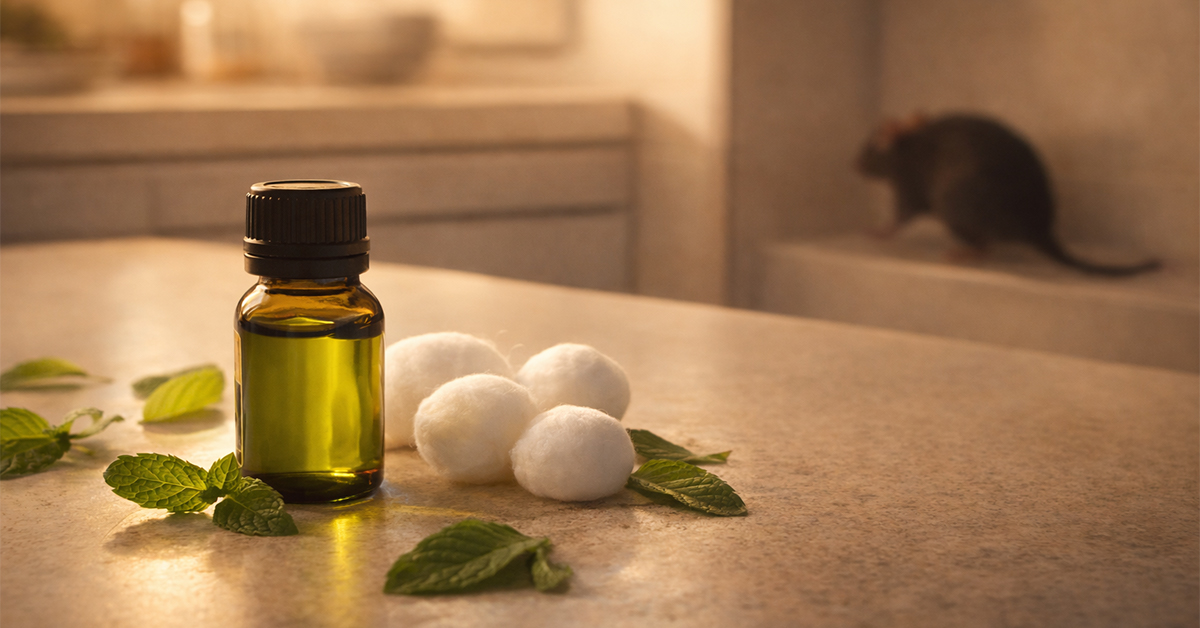
It usually starts in the middle of the night.
A faint scratching sound behind the wall. A rustle near the kitchen cabinet. At first you convince yourself it’s nothing — maybe the pipes, the wind, or the house settling.
But the next morning tells a different story.
Tiny droppings appear along the baseboards. A cereal box has been nibbled. Something in the air smells slightly off.
If you’ve ever dealt with rats or mice, you know how quickly they can turn a peaceful home into a stressful place.
Most people immediately think of traps or poison. But surprisingly, one of the most effective rodent deterrents might already be sitting in your cupboard.
And it’s completely natural.
The Natural Scent Rats Can’t Stand
One simple household product has gained attention for its ability to keep rodents away:
peppermint oil.
While humans associate peppermint with fresh gum or herbal tea, rodents experience it very differently.
Rats and mice rely heavily on their sense of smell to navigate the world. They use scent to locate food, communicate with other rodents, and identify safe paths.
Peppermint oil contains strong compounds such as menthol, which produce an extremely intense odor. For rodents, that smell can overwhelm their sensory system.
In areas with strong peppermint scent, rats often feel disoriented and uncomfortable — making them more likely to leave and search for a calmer environment.
This is why peppermint oil is commonly used as a natural rodent repellent rather than a poison.
Why Peppermint Oil Works as a Rodent Repellent
Rodents depend on scent far more than humans realize.
Their noses help them detect:
- food sources
- predator threats
- safe nesting areas
- navigation routes
When a strong scent like peppermint fills an area, it interferes with those signals.
Imagine trying to live in a room filled with heavy smoke or overpowering perfume.
Eventually, you would probably leave.
That’s essentially what peppermint oil does for rodents — it creates an environment they prefer to avoid.
While peppermint oil will not kill rodents, it encourages them to relocate somewhere else.
How to Use Peppermint Oil to Repel Rats
Using peppermint oil effectively requires more than just a few drops on the floor.
The key is placing the scent in the areas rodents typically travel.
Step 1: Identify rodent pathways
Look for signs such as:
- droppings
- gnaw marks
- greasy smudge trails along walls
- scratching sounds behind appliances
Common hotspots include:
- under kitchen sinks
- behind refrigerators
- along baseboards
- near trash bins
- around utility pipes
Step 2: Prepare peppermint cotton pads
Take small cotton balls or pieces of cloth.
Soak them with pure peppermint essential oil.
Avoid diluted sprays or scented products — concentrated oil works best.
Step 3: Place them strategically
Position the soaked cotton balls in areas rodents may enter or travel through.
Examples include:
- cabinet corners
- behind appliances
- entry gaps in walls
- basement corners
- garage edges
Spacing them every 50–80 cm (20–30 inches) along suspected routes can create a strong scent barrier.
Step 4: Refresh the scent regularly
Peppermint oil evaporates over time.
For best results:
- reapply oil every 2–3 days initially
- once rodent activity decreases, refresh once a week
A strong scent is what makes the repellent effective.
Important: Peppermint Oil Works Best With Prevention
Peppermint oil alone cannot solve a rodent problem if your home still provides easy food and shelter.
To improve results, combine it with basic rodent prevention steps.
Keep food sealed
Store grains, cereal, and pet food in airtight containers.
Clean crumbs and spills
Even small food traces attract rodents.
Take trash out regularly
Especially overnight.
Seal entry points
Use steel wool or metal mesh to block gaps around pipes or cracks.
Fix structural openings
Repair loose baseboards, door gaps, and vent openings.
These steps make your home far less attractive to rodents.
- → GST Housing Rebate 2026: Why Builders Say It Won’t Fully Revive Canada’s Condo Market
- → Canada Minimum Wage Increase 2026: Federal Rate Rises to $18.15 per Hour
- → Canada Relationship Finance Survey 2026: How Economic Pressures Are Shaping Modern Relationships
- → CRA Grocery Benefit and GST/HST Credit Boost in 2026: Eligibility, Payments, and What Families Should Know
- → CRA Filing System Changes in 2026: End of Tax Drop Boxes Across Canada
- → Working While on CPP in 2026: How Your Job Can Increase or Reduce Your Pension
- → CRA $2,200 Senior Bonus (March 2026): Eligibility, Payment Date & Latest Updates
When Peppermint Oil May Not Be Enough
Peppermint oil works best for prevention or minor rodent activity.
However, larger infestations may require additional solutions.
Situations that may need professional pest control include:
- large rat populations
- rodents nesting inside walls
- structural damage from chewing
- recurring infestations
In those cases, peppermint oil can still act as a supplementary deterrent.
Why Many Homeowners Prefer Natural Rodent Repellents
One reason peppermint oil has become popular is that it offers a non-toxic alternative to traditional pest control.
Many homeowners prefer it because it:
- avoids chemical poisons
- reduces risk to pets and children
- prevents dead rodents hidden in walls
- leaves a pleasant scent in the home
While it isn’t a miracle solution, it’s a practical first step many people find helpful.
Key Takeaways
| Insight | What It Means | Benefit |
|---|---|---|
| Peppermint oil repels rodents | Strong menthol scent disrupts rodents’ smell | Encourages rats to leave the area |
| Strategic placement matters | Cotton pads near entry points work best | Creates a scent barrier |
| Regular reapplication is necessary | Oil evaporates over time | Maintains effectiveness |
| Combine with prevention | Clean storage and sealed gaps | Reduces chances of infestation |