Spend a few minutes in the waiting room of an eye clinic and you’ll notice the same quiet habits.
People holding their phones farther away than usual. Someone leaning toward a magazine just to read the fine print. Another patient constantly adjusting reading glasses that didn’t exist in their life a few years ago.
For many adults, especially after their early forties, vision slowly begins to change. Small text becomes harder to read. Screens seem dimmer. Some people are eventually told they may need procedures like cataract surgery or corrective treatments later in life.
But researchers are exploring something new — and surprisingly simple.
A clear eye gel that may temporarily improve vision without lasers, implants, or major surgery.
The Idea Behind the New Clear Eye Gel
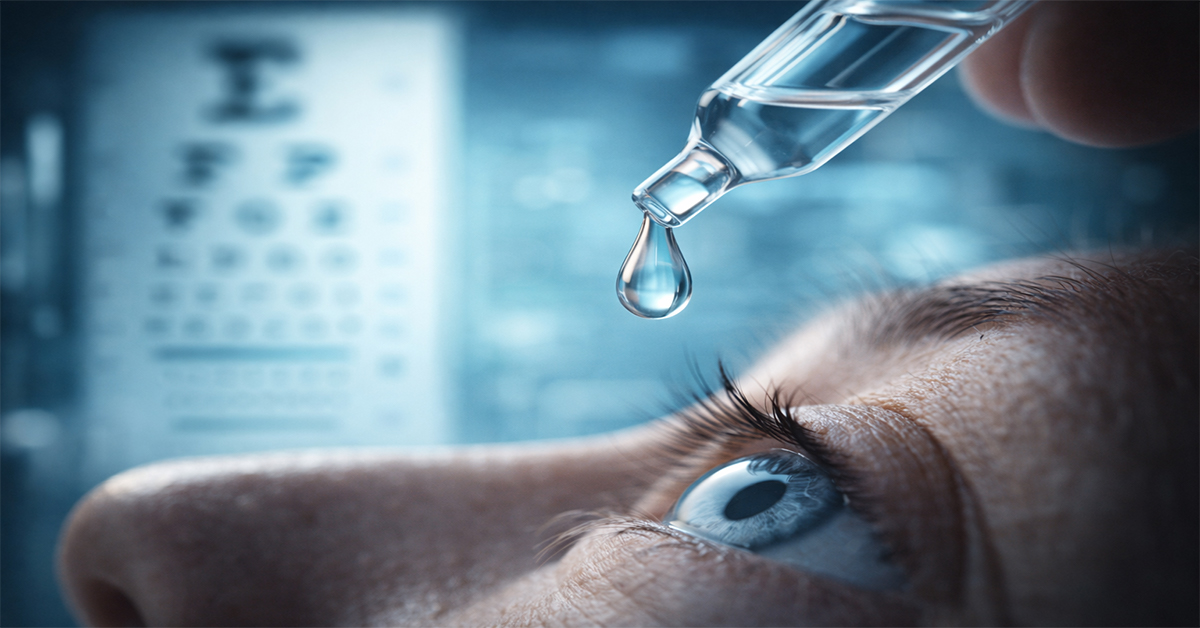
At first glance, the tiny vial looks like a typical eye-drop bottle.
But what’s inside behaves very differently from ordinary drops.
Scientists are developing specialized optical gels designed to form a thin, transparent layer over the surface of the eye. When applied correctly, this layer can subtly adjust how light enters the eye.
In simple terms, the gel acts like a temporary optical lens sitting directly on the cornea.
This concept is being explored particularly for presbyopia, the common age-related condition that makes it difficult to focus on nearby objects.
Presbyopia happens because the eye’s natural focusing ability gradually weakens with age. Most people notice it when they start needing reading glasses.
Researchers believe these gels could offer a non-permanent way to adjust focusing, giving users clearer near vision for several hours.
How the Technology Works
The science behind these gels combines biomaterials, ophthalmology, and optical engineering.
The cornea — the transparent front surface of the eye — already plays a major role in focusing light. Even a tiny change to its shape or refractive properties can influence how clearly we see.
The gel works by creating a microscopic optical layer that:
• spreads evenly across the cornea
• slightly changes how light bends as it enters the eye
• improves focus for near-vision tasks
Some experimental gels use smart polymers, materials designed to interact naturally with the tear film on the eye’s surface. Others rely on carefully engineered thickness to create a subtle lens effect.
The result is a temporary improvement in focusing ability.
Because the gel eventually dissolves or washes away with natural tears, the effect is reversible and short-term.
What Early Research and Trials Suggest
Clinical studies are still ongoing, but early results have been encouraging.
Participants in some early trials reported that after applying the gel, they were able to read two or more additional lines on a standard eye chart for near vision.
For many users, the improvement lasted several hours before gradually fading.
That might sound modest, but in everyday life it can mean the difference between:
• comfortably reading a phone screen
• checking small print on labels
• working on a laptop without switching glasses
Researchers emphasize that the gel does not cure vision problems permanently. Instead, it offers a flexible option that may help people manage certain visual challenges throughout the day.
How These Gels Might Be Used in Daily Life
One reason researchers are excited about this technology is how simple the application process could be.
Using the gel typically involves:
- washing hands thoroughly
- tilting the head slightly back
- applying a small amount of gel to the lower eyelid
- blinking to spread the layer across the eye
Within a minute or two, the gel forms an even optical surface.
Some future products may be designed for daily morning use, similar to applying eye drops. Others might be used occasionally — for example before long reading sessions or detailed work.
Because the gel’s effects are temporary, users can return to their normal vision once it wears off.
Who Could Potentially Benefit
The technology is primarily being studied for mild to moderate vision changes, especially:
Presbyopia
Difficulty focusing on nearby text that develops with age.
Mild corneal irregularities
Small imperfections in how the cornea bends light.
Temporary vision support
Situations where glasses may be inconvenient.
However, researchers stress that these gels are not designed to treat serious eye diseases such as:
- advanced cataracts
- glaucoma
- retinal disorders
- macular degeneration
Those conditions require medical treatment and professional care.
Why Eye Exams Still Matter
Even if vision gels become widely available, experts say they should never replace routine eye care.
A full eye exam allows doctors to evaluate:
- eye pressure
- retinal health
- corneal structure
- lens clarity
Many serious eye conditions develop gradually without obvious symptoms. Early detection is essential for protecting long-term vision.
Think of these gels as a supportive tool, not a substitute for professional eye care.
Safety and Medical Oversight
Because the cornea is extremely sensitive, any product designed to stay on its surface must undergo rigorous testing.
Researchers are studying potential factors such as:
- → GST Housing Rebate 2026: Why Builders Say It Won’t Fully Revive Canada’s Condo Market
- → Canada Minimum Wage Increase 2026: Federal Rate Rises to $18.15 per Hour
- → Canada Relationship Finance Survey 2026: How Economic Pressures Are Shaping Modern Relationships
- → CRA Grocery Benefit and GST/HST Credit Boost in 2026: Eligibility, Payments, and What Families Should Know
- → CRA Filing System Changes in 2026: End of Tax Drop Boxes Across Canada
- → Working While on CPP in 2026: How Your Job Can Increase or Reduce Your Pension
- → CRA $2,200 Senior Bonus (March 2026): Eligibility, Payment Date & Latest Updates
• long-term corneal health
• oxygen flow to the eye
• interaction with tear film
• allergy risks or irritation
Regulatory agencies require extensive safety data before approving any medical eye product for public use.
Until then, experts advise avoiding unverified eye products sold online that claim to improve vision instantly.
A New Direction for Vision Care
For decades, vision correction has largely revolved around three choices:
- glasses
- contact lenses
- surgery
The development of optical gels introduces a possible fourth category — temporary, adjustable correction.
Instead of permanent procedures, some people may prefer flexible tools that can be used only when needed.
This approach reflects a broader trend in medicine toward less invasive, customizable treatments.
Key Takeaways
| Topic | Explanation | Benefit |
|---|---|---|
| Clear eye gel technology | Forms a temporary optical layer on the cornea | May improve focus without surgery |
| Best suited for presbyopia | Helps with age-related near vision loss | Useful for reading and close work |
| Effects are temporary | Gel dissolves naturally over time | No permanent change to the eye |
| Medical guidance required | Eye exams remain essential | Protects long-term eye health |